

A Static Site Generator (SSG) is a tool that compiles raw content (typically written in Markdown, HTML, or templating languages) and templates into static HTML pages. Unlike dynamic sites that rely on databases and server-side processing, static sites are pre-rendered at build time and served as-is to users—resulting in faster load times, enhanced security, and better scalability. Static Site Generators offer a modern approach to web development by combining simplicity, performance, and flexibility in one toolkit. For developers building blogs, documentation, landing pages, portfolios, or JAMstack applications, SSGs are an ideal choice.
Why Developers Prefer Static Site Generators
While there are several reasons for the static site generators being the first choice for the majority of developers, following are few of reasons behind the preference of the static site generators being used:
- Speed: Pre-built HTML pages load instantly, with no server processing.
- Security: No server or database means fewer attack vectors.
- Cost-effective: Host your site for free on GitHub Pages, Netlify, or Vercel.
- SEO-friendly: Clean HTML structure aids in better indexing by search engines.
- Customization: Use your favorite templating languages, CSS frameworks, and deployment pipelines.
The Rise and Evolution of Static Site Generators
In the early days of the internet, static websites were the norm—simple HTML pages, manually coded, uploaded to servers via FTP. As dynamic content and user interactivity became mainstream, static sites took a backseat in favor of CMS-powered platforms like WordPress, Joomla, or Drupal. But the tide has turned again—thanks to the advent of modern Static Site Generators (SSGs). Software engineers are in high demand for building scalable, reliable, and secure digital solutions across industries.
Today, SSGs are no longer a throwback to the past but a leap into the future. Their reinvention has been driven by the demands of performance, SEO, security, scalability, and developer productivity. As websites now need to be faster, leaner, and more SEO-optimized than ever, SSGs have emerged as the ideal solution—bridging the gap between static simplicity and dynamic flexibility via JAMstack.
1. NextJS
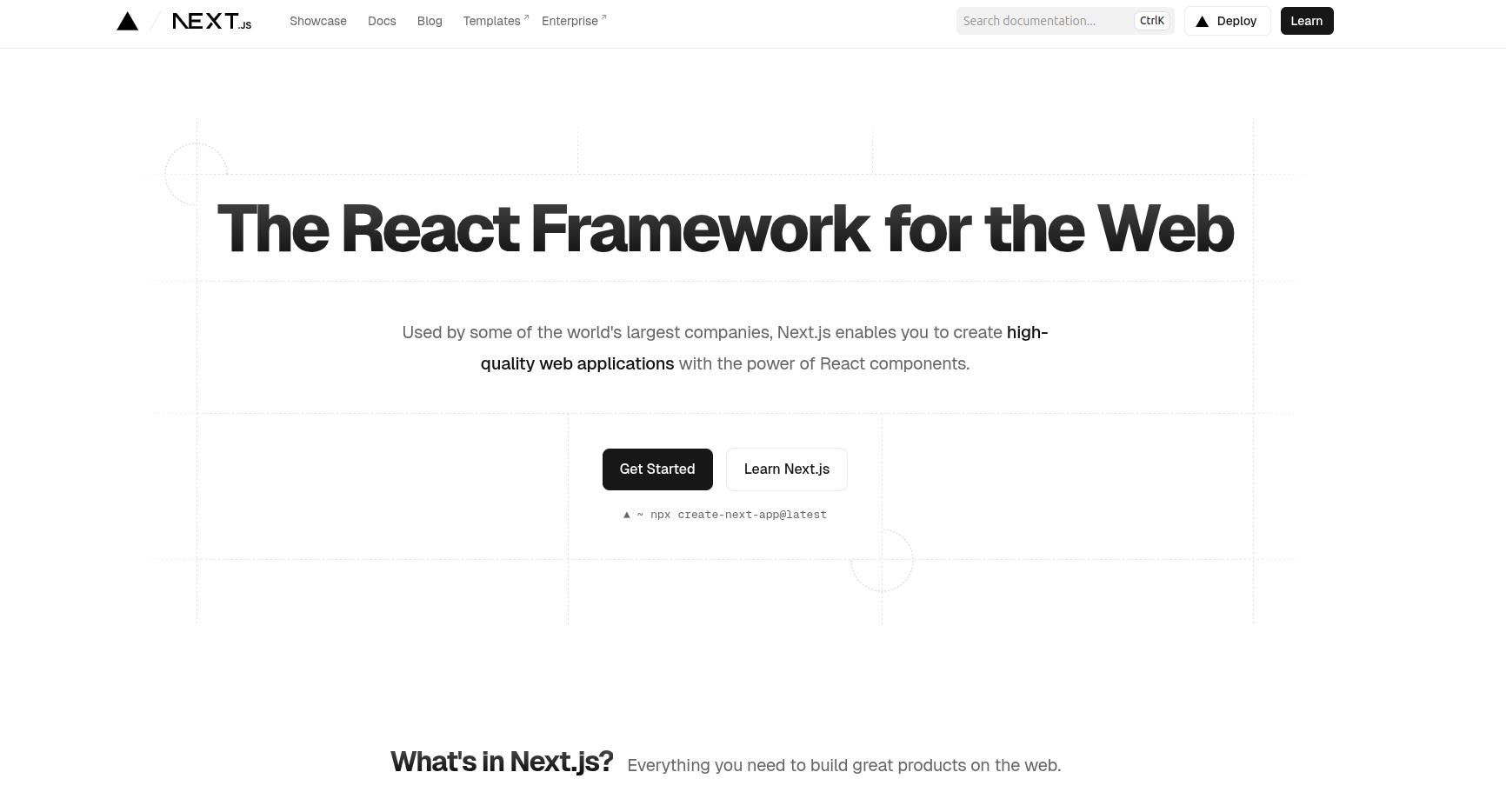
Built and maintained by Vercel, Next.js has become the gold standard for hybrid rendering—offering static site generation (SSG) alongside server-side rendering (SSR) and incremental static regeneration (ISR). This versatility allows developers to pre-render core pages for speed while keeping others dynamic. With built-in image optimization, TypeScript support, and API routes, Next.js eliminates the need for a separate backend in many cases. It’s widely used by enterprises and startups alike for its scalability, developer experience, and ecosystem maturity. Sites like TikTok, Hulu, and Hashnode rely on Next.js for global-scale performance. Thanks to ISR, large content-heavy sites can rebuild only changed pages—cutting rebuild times from hours to seconds. With CDN deployment through Vercel, pages often serve within under 50 ms globally, giving users instant experiences.
| Attribute | Details |
| Overview | React-based hybrid framework supporting both static site generation (SSG) and server-side rendering (SSR). |
| Language/Framework | JavaScript / React |
| Best For | React developers, eCommerce, blogs, SaaS sites |
| Key Strength | Hybrid rendering model with enterprise-ready features |
| Notable Features | Incremental Static Regeneration (ISR), Image Optimization, API routes, TypeScript support |
| Ideal Use Case | Large-scale apps needing both static speed and dynamic flexibility |
| Deployment Options | Vercel (native), Netlify, AWS Amplify |
2. Hugo
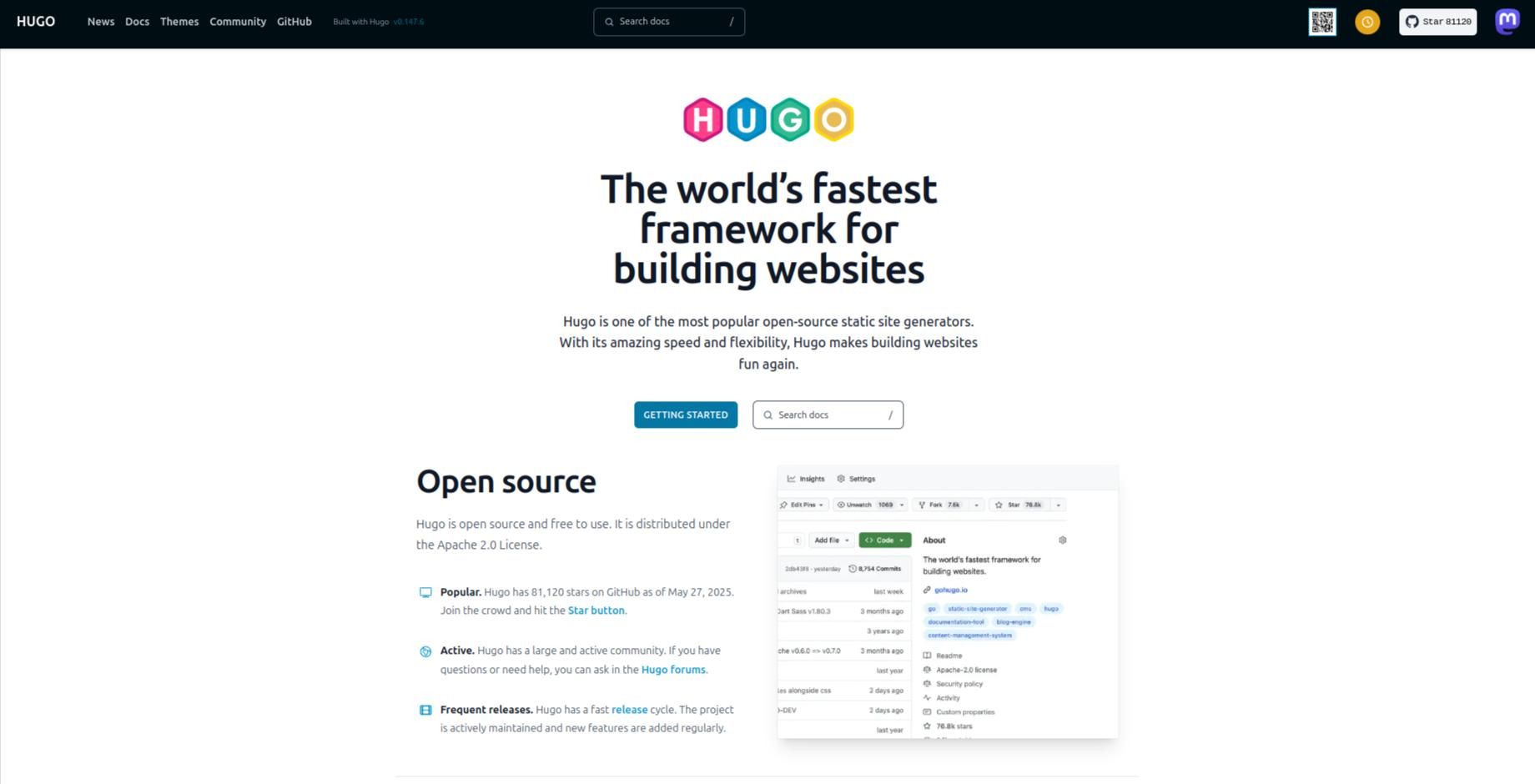
Written in Go, Hugo is one of the fastest static site generators on the planet—capable of generating over 1,000 pages per second. Its minimalist configuration, coupled with a flexible templating engine, makes it ideal for developers who value simplicity and speed. Technical writers and bloggers love Hugo for its near-instant build times and seamless Markdown integration. Hugo’s theming system and shortcodes allow teams to build visually consistent yet easily maintainable documentation portals. Its zero dependencies mean you can deploy anywhere—GitHub Pages, Netlify, or an S3 bucket. The performance advantage is so strong that large organizations like Cloudflare and Kubernetes use Hugo for their docs, proving its reliability at scale.
| Attribute | Details |
| Overview | Written in Go, Hugo is one of the fastest SSGs that can build thousands of pages in seconds. |
| Language/Framework | Go |
| Best For | Technical blogs, documentation sites |
| Key Strength | Speed and simplicity |
| Notable Features | Built-in themes, shortcodes, Markdown-based content |
| Ideal Use Case | Content-heavy sites with frequent builds |
| Deployment Options | Netlify, GitHub Pages, Cloudflare Pages |
3. Gatsby

Gatsby is another React-based SSG that focuses on using GraphQL to pull content from various sources, including CMSs, APIs, and local files. It’s feature-rich, with a huge ecosystem of plugins and starters. It’s great for projects that require rich data integrations, performance, and scalability. Developers building JAMstack sites love how Gatsby merges content and code effortlessly, creating performant pages that load 2–3× faster than traditional CMS-driven sites. rather than managing backend like NodeJS infrastructure. Beyond speed, Gatsby emphasizes developer experience—offering hot reloading, prefetching, and a strong community around its cloud build platform. It’s an excellent choice for marketing sites, eCommerce, and data-rich SaaS frontends that demand modern web performance.
| Attribute | Details |
| Overview | React-based SSG using GraphQL to source data from CMSs, APIs, or files. |
| Language/Framework | JavaScript / React |
| Best For | JAMstack sites, headless CMS integrations |
| Key Strength | GraphQL-powered data layer and extensive plugin ecosystem |
| Notable Features | Progressive Image Loading, Fast Refresh, Rich Plugin Library |
| Ideal Use Case | Complex marketing or content-driven websites |
| Deployment Options | Gatsby Cloud, Netlify, Vercel |
4. Jekyll
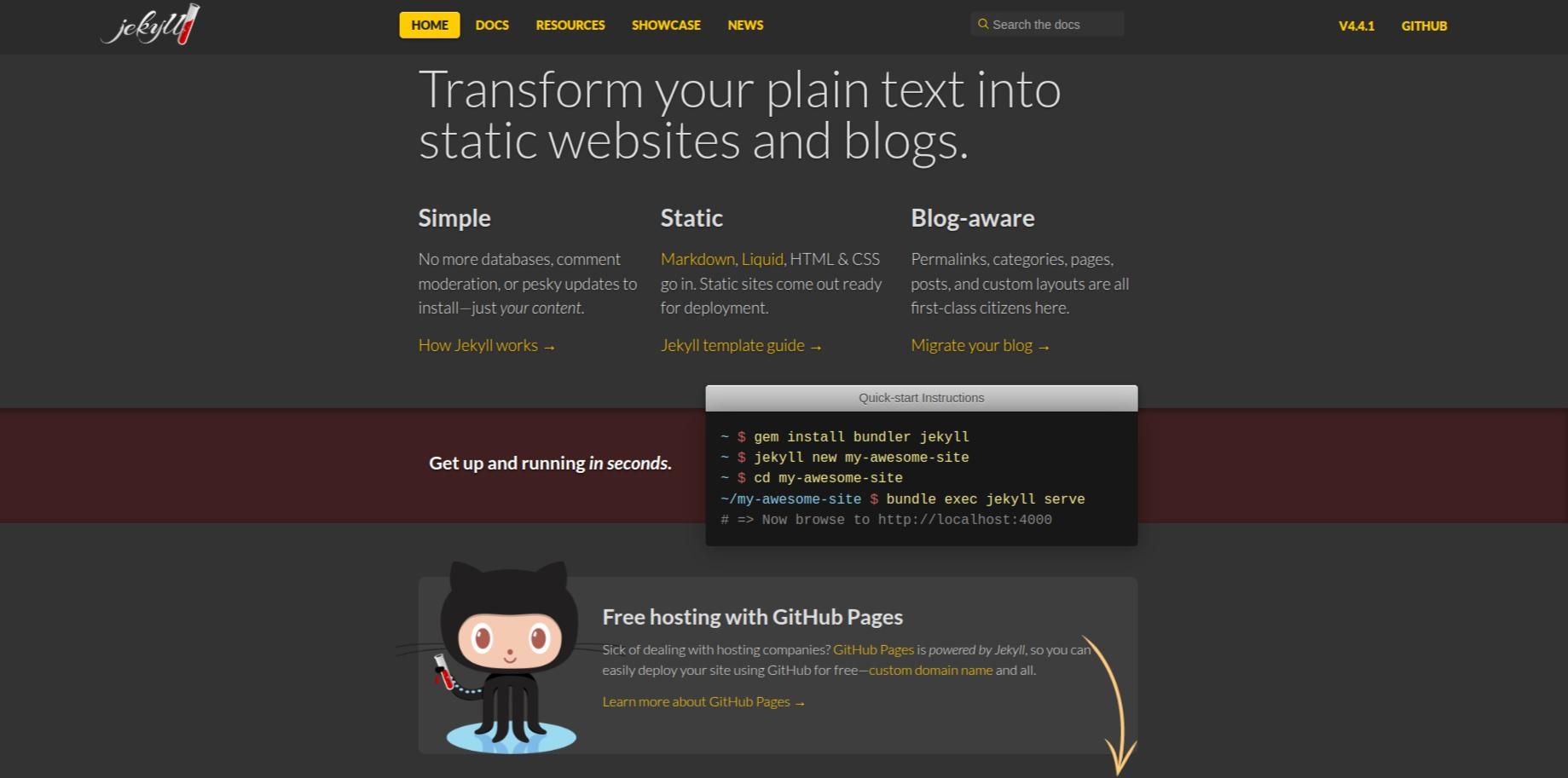
Jekyll is the original SSG that popularized the concept. It is built in Ruby and is tightly integrated with GitHub Pages, making it the default choice for open-source documentation and developer blogs. It uses Liquid templating and supports features like pagination, categories, and permalinks. Using a CI/CD pipeline, you can automate your build and deployment process, with the expertise of DevOps engineers improving consistency and security. Jekyll’s maturity is one of its biggest strengths—it has powered millions of GitHub Pages sites for over a decade, with a vibrant ecosystem of themes and plugins. For developers seeking a no-nonsense, reliable solution with minimal upkeep, Jekyll remains timeless.
| Attribute | Details |
| Overview | Ruby-based SSG that popularized static site generation, integrated deeply with GitHub Pages. |
| Language/Framework | Ruby |
| Best For | Blogs, GitHub Pages-hosted documentation |
| Key Strength | Simple configuration and GitHub integration |
| Notable Features | Liquid templates, pagination, categories, permalinks |
| Ideal Use Case | Open-source documentation and developer blogs |
| Deployment Options | GitHub Pages, Netlify, custom CI/CD |
5. Eleventy (11ty)
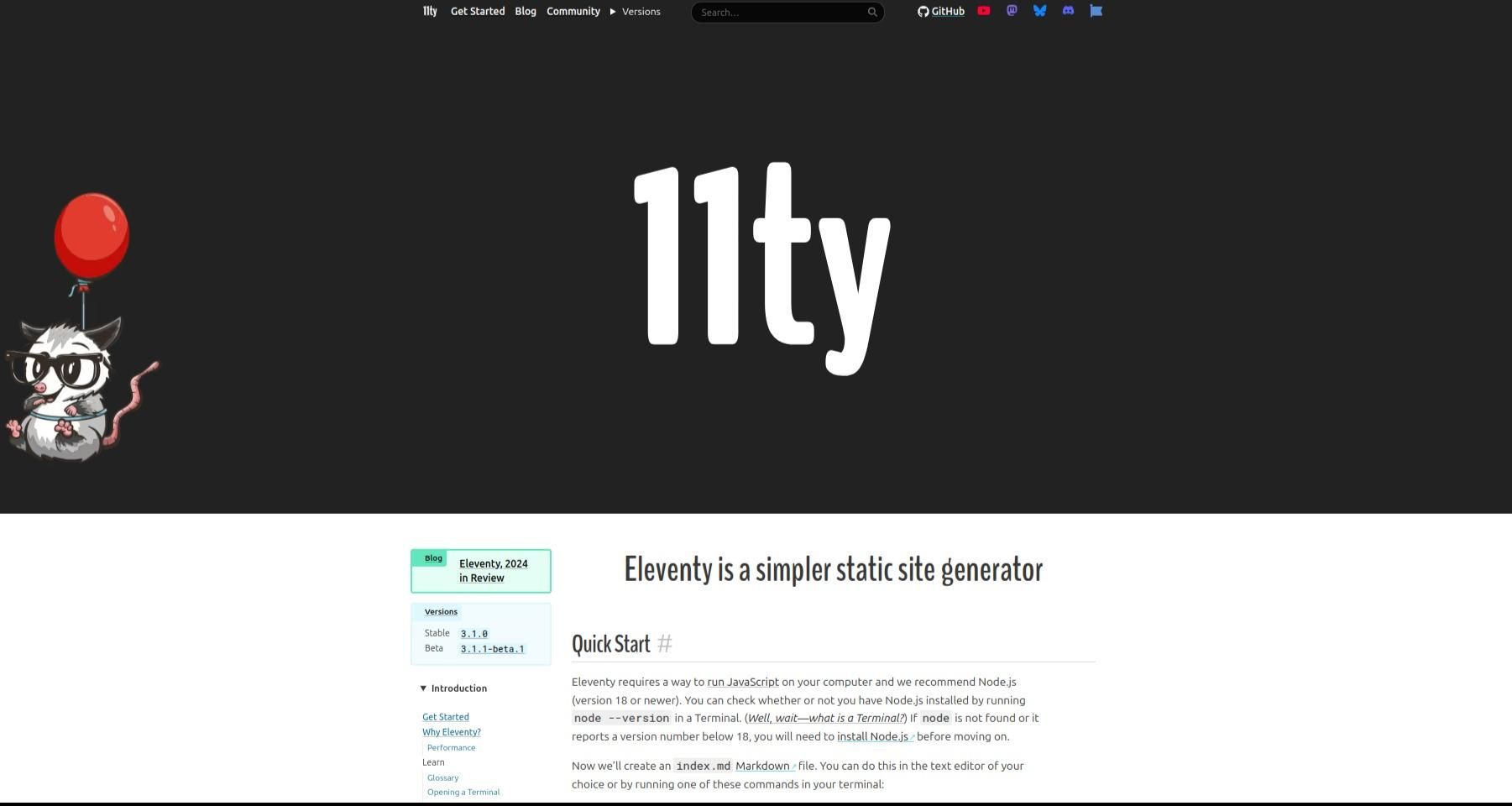
Eleventy is a JavaScript-based SSG that prides itself on simplicity and flexibility. It supports multiple templating engines such as Markdown, Liquid, Nunjucks, and Handlebars, allowing developers to use what they prefer. Eleventy doesn’t impose a framework, giving developers control over their projects. Eleventy’s lightweight architecture and compatibility with Markdown-based workflows make it perfect for custom documentation, blogs, and minimalist portfolio sites. It’s been praised for its build performance rivaling Hugo, while offering a friendlier JavaScript ecosystem. Many developers regard Eleventy as the “modern Jekyll” of the JS world.
| Attribute | Details |
| Overview | JavaScript-based SSG focused on simplicity, flexibility, and multiple templating engines. |
| Language/Framework | JavaScript |
| Best For | Custom, minimalist static websites |
| Key Strength | Flexibility and multi-template support |
| Notable Features | Markdown, Liquid, Nunjucks, Handlebars support |
| Ideal Use Case | Developers wanting full control without a framework lock-in |
| Deployment Options | Netlify, Cloudflare Pages, GitHub Pages |
6. Nuxt
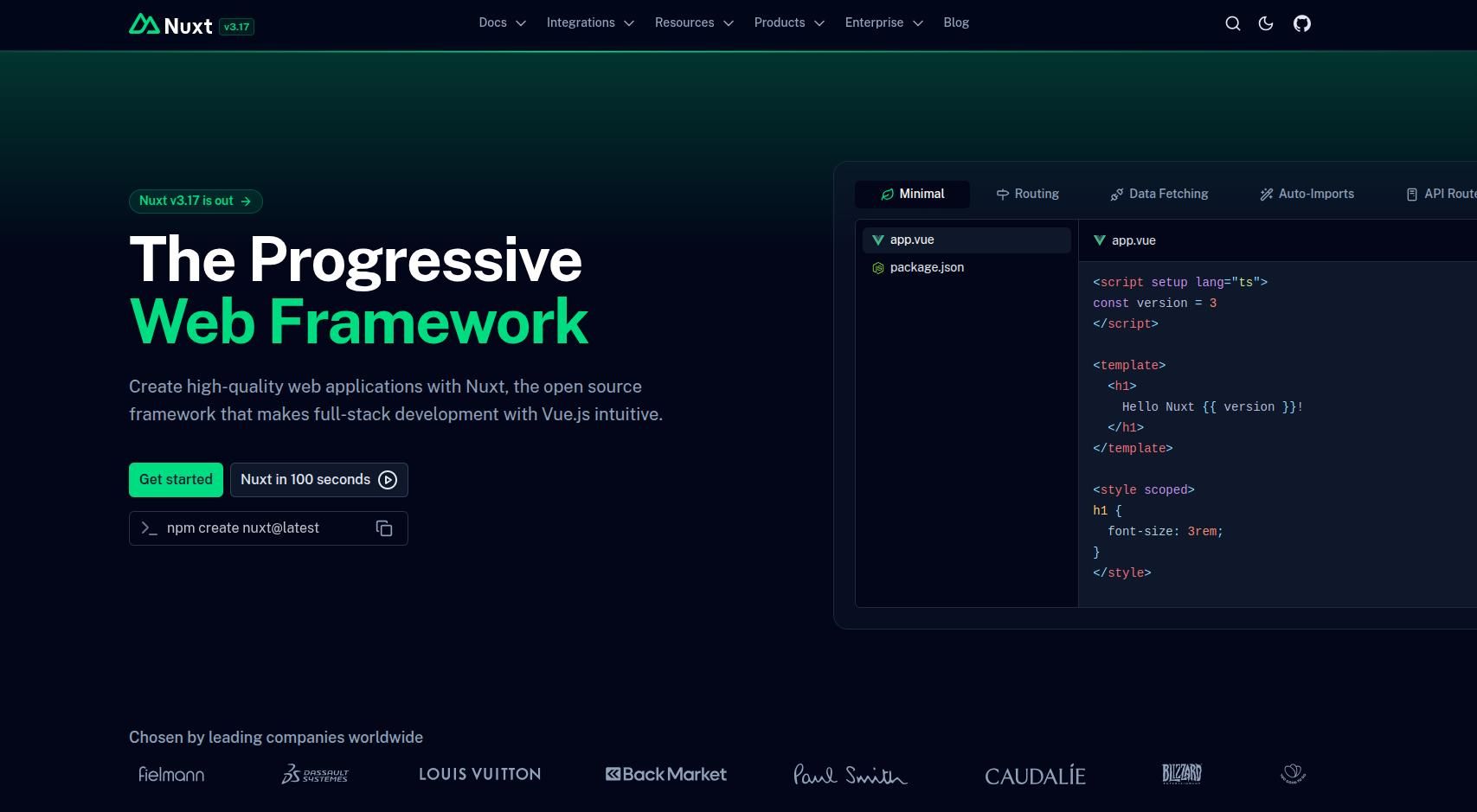
Nuxt is to Vue what Next.js is to React. It's a Vue.js framework with support for static generation, server-side rendering, and client-side rendering. With a simple command like nuxt generate, developers can output a static version of their Vue app. Nuxt includes automatic routing, meta tag management, and a robust plugin architecture. Nuxt combines Vue’s reactivity with the flexibility of static generation—making it perfect for SaaS landing pages, documentation, and eCommerce sites. Its hybrid rendering model also lets developers mix SSG with SSR to handle dynamic content efficiently. Many Vue developers appreciate how Nuxt bridges frontend interactivity with static performance.
| Attribute | Details |
| Overview | Vue.js framework supporting SSG, SSR, and CSR modes — a Vue alternative to Next.js. |
| Language/Framework | JavaScript / Vue.js |
| Best For | Vue developers building SEO-friendly sites |
| Key Strength | Hybrid rendering with automatic routing |
| Notable Features | Meta tag management, Vue file structure, plugin system |
| Ideal Use Case | Vue-powered marketing sites or small SaaS projects |
| Deployment Options | Vercel, Netlify, Static hosting providers |
7. Astro
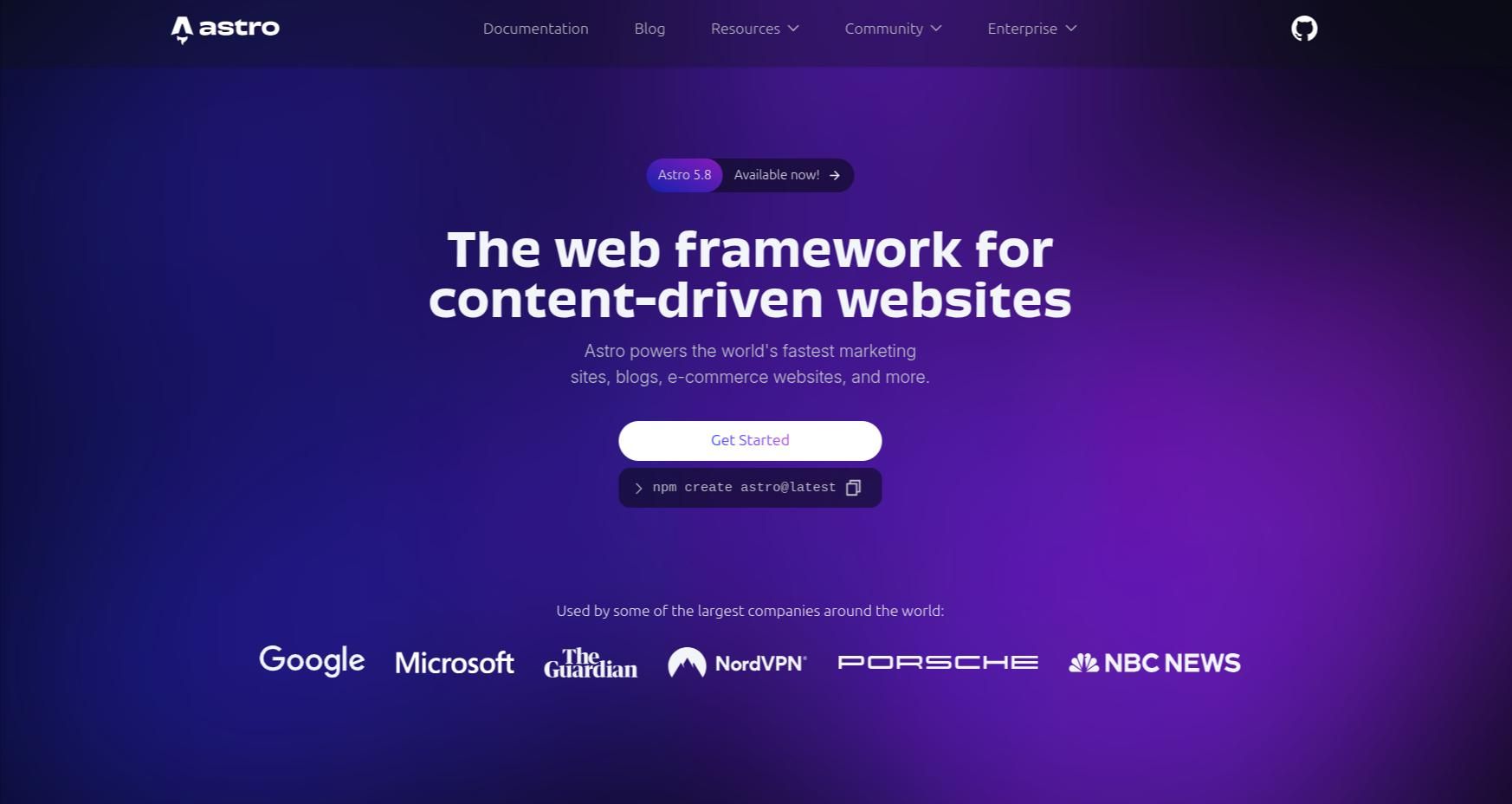
Astro is a modern SSG that focuses on performance by delivering zero JavaScript by default. It allows developers to use components from React, Vue, Svelte, and more in the same project. Astro is unique in that it only hydrates interactive components when necessary, reducing load times and improving Lighthouse scores. It’s a framework designed for the modern web, where minimalism meets flexibility. By default, Astro pages load up to 40–60% faster than traditional SPAs, making it perfect for blogs, marketing sites, and documentation where speed is everything. Its approach aligns with the web’s renewed focus on performance-first architecture.
| Attribute | Details |
| Overview | Modern SSG optimized for performance with zero JavaScript by default. |
| Language/Framework | JavaScript / Framework-agnostic |
| Best For | Performance-optimized static sites |
| Key Strength | Zero-JS rendering and framework flexibility |
| Notable Features | Component islands, framework mixing (React, Vue, Svelte) |
| Ideal Use Case | Fast, lightweight marketing or documentation sites |
| Deployment Options | Netlify, Vercel, Cloudflare Pages |
8. Hexo

Hexo is a fast, blog-focused SSG built on Node.js. It has a simple setup, extensive theme support, and a growing plugin ecosystem. Developers can easily customize layouts and integrate features like code highlighting, SEO, and social sharing. With the ability to handle large-scale blogs effortlessly and render pages in milliseconds, Hexo combines old-school writing flow with modern deployment speed. It’s particularly beloved by tech bloggers and developers maintaining documentation sites without complex infrastructure.
| Attribute | Details |
| Overview | Node.js-based SSG ideal for developers who write in Markdown and prefer simplicity. |
| Language/Framework | JavaScript / Node.js |
| Best For | Developer blogs and technical sites |
| Key Strength | Markdown-first workflow and ease of customization |
| Notable Features | Plugins for SEO, code highlighting, and social sharing |
| Ideal Use Case | Personal blogs or developer portfolios |
| Deployment Options | GitHub Pages, Netlify, custom hosting |
9. SvelteKit

SvelteKit, the successor to Sapper, is a full-fledged application framework for Svelte. It supports static site generation, server rendering, and client-side interactivity. Developers who love the Svelte framework can use SvelteKit to build static sites with excellent performance and reactivity. It’s especially appealing for performance-focused projects: thanks to its compiler-first design, SvelteKit-generated pages can load up to 30% faster than similar React or Vue counterparts. Whether used for portfolios or web apps, SvelteKit is redefining what “lightweight” really means in web development.
| Attribute | Details |
| Overview | Modern SSG and framework for Svelte supporting static, server, and client rendering. |
| Language/Framework | JavaScript / Svelte |
| Best For | Svelte enthusiasts and performance-focused developers |
| Key Strength | Ultra-lightweight builds and fine-grained rendering control |
| Notable Features | File-based routing, API endpoints, reactive components |
| Ideal Use Case | Interactive, fast web applications |
| Deployment Options | Vercel, Netlify, custom servers |
10. MkDocs
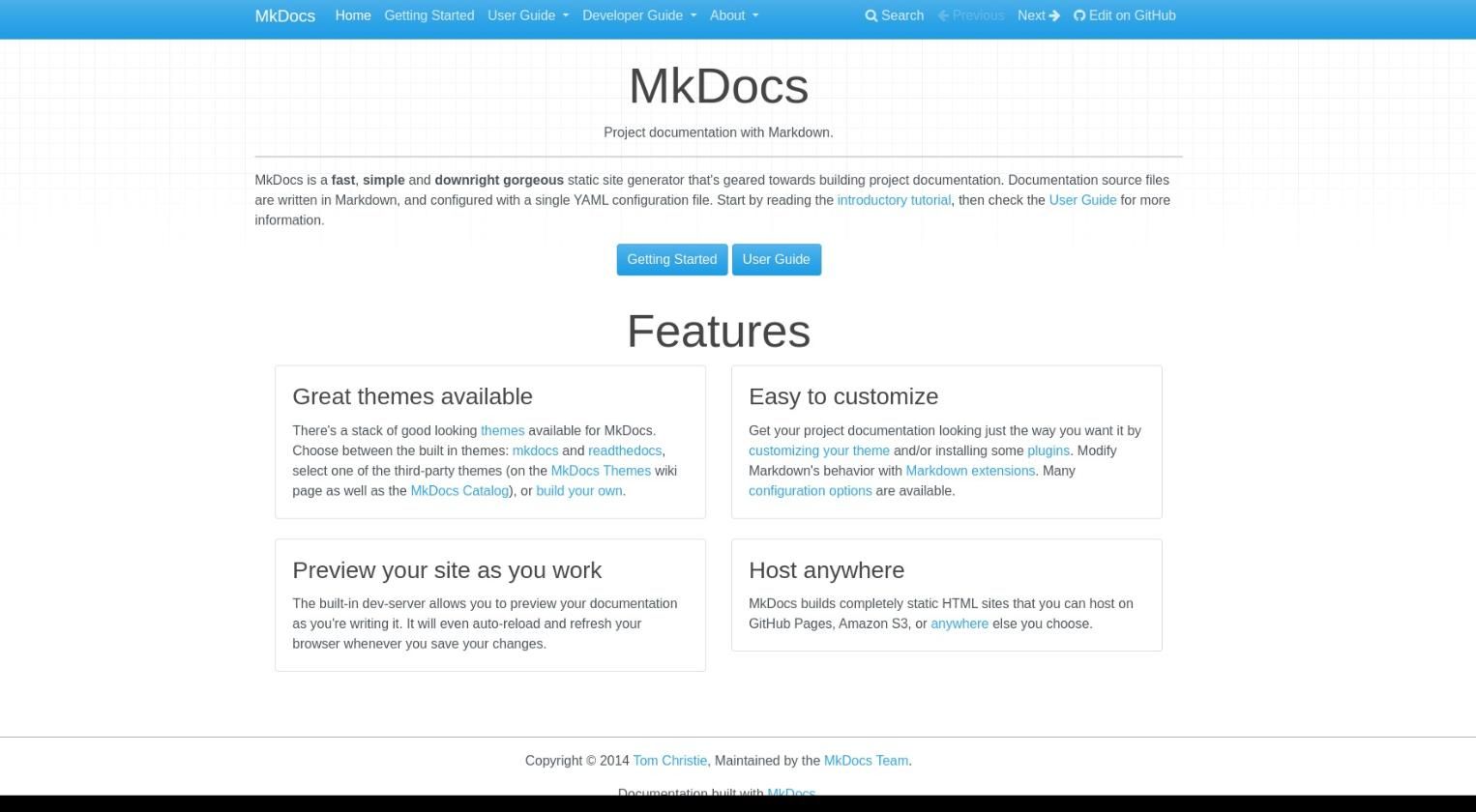
MkDocs is a Python-based static site generator designed specifically for project documentation. It uses Markdown and a YAML configuration file, making it simple to write and deploy. Popular among Python developers, it integrates seamlessly with tools like Material for MkDocs for a polished documentation UI. Python developers favor MkDocs for its reliability and simplicity—it’s widely used for open-source project documentation, including Python libraries themselves. Its focus on static delivery means documentation loads instantly and scales effortlessly.
| Attribute | Details |
| Overview | Python-based SSG built specifically for creating project documentation. |
| Language/Framework | Python |
| Best For | Technical documentation |
| Key Strength | Easy setup with Markdown and YAML configuration |
| Notable Features | Material for MkDocs theme, versioning, search support |
| Ideal Use Case | Software documentation and internal wikis |
| Deployment Options | GitHub Pages, ReadTheDocs, Netlify |
The Modern Role of SSGs in Web Development
Today, SSGs are not just for hobbyists or minimalist developers. Enterprises, startups, and large-scale platforms are embracing static site generators for critical production workloads. Here's how and why:
- Speed as a Competitive Advantage : Google's Core Web Vitals prioritize load speed, and SSGs deliver lightning-fast performance. Static files served over CDNs ensure users around the world get near-instant access. Whether it's a personal portfolio or a global eCommerce platform, speed matters—and SSGs deliver.
- SEO and Crawlability : Pre-rendered HTML improves crawlability. Unlike SPA-based frameworks that rely on client-side rendering, SSGs give search engines fully rendered pages. Better indexing leads to better visibility and, ultimately, more traffic.
- Developer Experience (DX) : SSGs simplify workflows. Developers can focus on writing content in Markdown, styling with their preferred CSS tools, and committing to Git. CI/CD workflows with Netlify, Vercel, or GitHub Actions automate deployment, testing, and preview environments.
- Security : Eliminating runtime servers or databases removes entire classes of vulnerabilities. No SQL injections, no PHP exploits, no server misconfigurations. You just serve files—and that’s a security win.
- Cost and Maintenance : SSGs can often be deployed on free tiers of static hosting platforms. There's no need for server provisioning, uptime monitoring, or regular backend patches. Less time maintaining means more time building.
Challenges and Considerations
Despite their advantages, SSGs aren’t the perfect solution for every use case. It’s important to consider the following:
- Build Times: On large sites with thousands of pages, rebuild times can become a bottleneck. Tools like Next.js and Gatsby address this with incremental builds.
- Dynamic Content: If your site depends heavily on user input, real-time data, or authentication, you’ll need to pair your SSG with APIs or serverless functions.
- Plugin Ecosystem: Some SSGs (like Gatsby or Jekyll) have mature plugin ecosystems; others require more custom development.
The good news? Many of these issues are being actively addressed by the community. Features like Incremental Static Regeneration (ISR), deferred static generation, and dynamic routing are closing the gap between static and dynamic capabilities. Developing mobile applications is the best way for the startups and small scale companies for getting more audience reach in today's digital world.
Choosing the Right SSG
Selecting the right Static Site Generator depends on a number of factors:
Choosing SSG as per - Skillset:
- Are you a React dev? Choose Next.js or Gatsby.
- Prefer Vue? Go with Nuxt.
- Like simplicity and Markdown? Hugo or Eleventy may be best.
- Writing documentation? MkDocs or Jekyll might be your go-to.
Choosing SSG as per - Project Type:
- Personal blog: Hexo, Hugo, Eleventy
- Marketing site: Gatsby, Astro, Next.js
- Documentation: MkDocs, Jekyll
- SaaS landing page: Astro, Next.js
- eCommerce or data-rich UI: Next.js with ISR, or Gatsby with GraphQL
Choosing SSG as per - Hosting and Deployment:
- If you're deploying on Vercel, Next.js is the most seamless.
- If you're going with Netlify, Gatsby, Hugo, or Eleventy integrate perfectly.
- For GitHub Pages, Jekyll is native.
Choosing SSG as per - Community and Ecosystem: Pick a generator with an active community, good documentation, and plenty of themes or plugins. This will reduce friction and accelerate development.
Conclusion
The web is constantly evolving—but the principles of speed, scalability, simplicity, and maintainability are evergreen. Static Site Generators deliver on all these fronts. By embracing SSGs, developers can:
- Build better-performing websites
- Reduce security risks
- Simplify their workflows
- Save costs on infrastructure
- Delight users with blazing-fast experiences
Whether you’re building a personal blog, a documentation portal, a startup landing page, or a global web app—there’s a static site generator that fits your needs. As the tooling improves and the JAMstack ecosystem matures, SSGs will not only remain relevant but become the backbone of modern web development. The GraphQl Api's is the most popular option after Rest Api's for data and GraphQl IDE's and Client's provides the best way to manage them. Now is the perfect time for developers to invest in understanding, testing, and building with SSGs—because the future of the web is static… but in the smartest, most dynamic way possible.